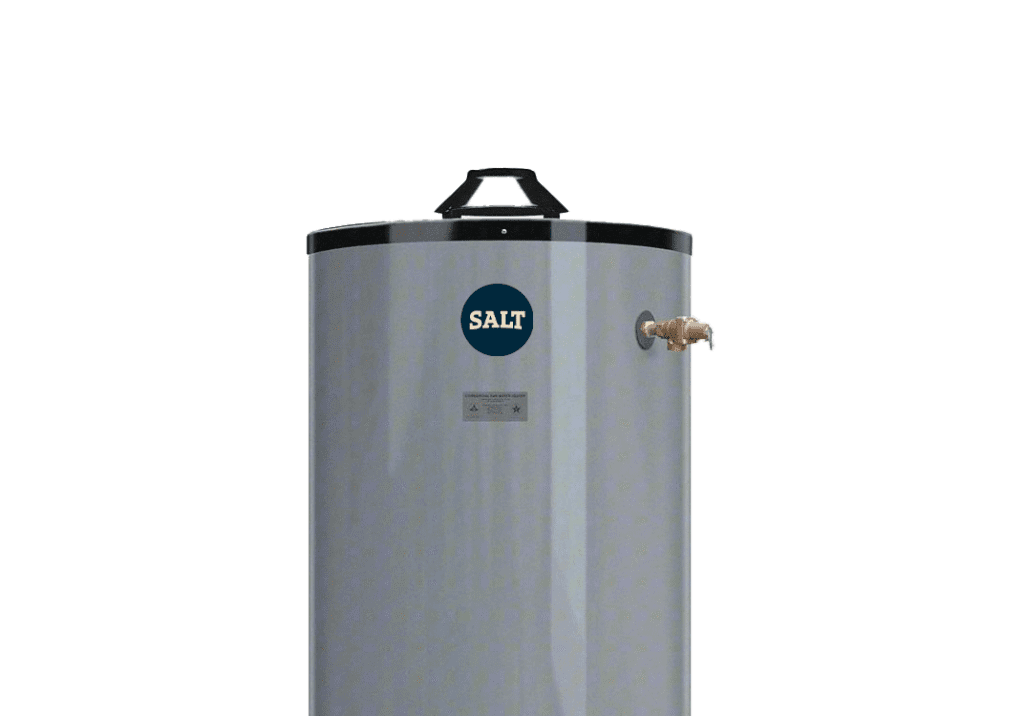





Tankless Water Heater Services in Austin, TX
Austin homeowners who want endless hot water without surprise add-ons get a licensed SALT plumber who sizes the unit, checks the gas line and venting, and plans around Austin’s hard water before any work begins.
SALT installs, repairs, and replaces tankless water heaters across the greater Austin area, including Rinnai, Navien, and Rheem units. Plumbing LIC# M-44221 covers the work, and SALT offers same-day water heater installation with a $100 credit if the installation is not completed the same day. Pricing is flat-rate and set before work starts.
Serving Central Texas since 1984: family-owned service for Austin and surrounding communities.
Licensed plumbing team, LIC# M-44221: qualified to install, repair, and replace tankless water heaters.
Upfront flat-rate pricing: a clear price before work begins.
Same-day water heater installation or a $100 credit: a $100 credit applies if the install is not completed that day.
What a Tankless Water Heater Costs Installed in the Greater Austin Area
A tankless water heater installation in Austin is priced by the home, because the heater is only part of the job. SALT sets a flat-rate price after a licensed plumber reviews the fuel type, gas line, venting route, and electrical capacity, so the approved number covers the full scope.
| Installation Type | Approved Installed Price Range | Typical Required Adders |
|---|---|---|
| Direct tankless replacement | Flat-rate price set after on-site review | Existing connections and venting must be compatible. |
| Gas tank-to-tankless conversion | Flat-rate price set after on-site review | Gas-line upgrade and venting upgrade, each priced separately after review. |
| Whole-home electric tankless installation | Flat-rate price set after on-site review | Electrical capacity and panel work depend on the home. |
A direct replacement is generally more straightforward because the home may already have a compatible gas supply, venting route, condensate drain, and isolation valves. Replacing a standard tank with a gas tankless unit often needs more work: a larger gas line, dedicated venting, condensate drainage, removal of the old tank, and scale protection suited to Austin water.
Equipment capacity and efficiency tier also change the scope. SALT’s plumbers confirm the unit can meet the household’s hot-water demand, then review pipe sizing, vent routing, electrical needs, permits, and inspections. For a wider look at labor and equipment, read the water heater installation cost guide. Financing options are available on qualifying work.
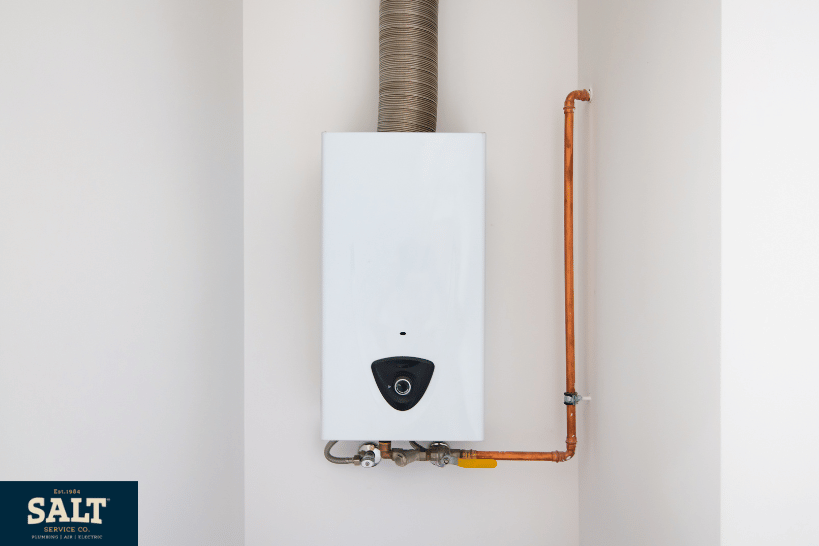
What Size Tankless Unit an Austin Home needs
The right tankless unit for an Austin home is sized by peak simultaneous gallons-per-minute demand, incoming water temperature, fixture mix, and available gas or electrical capacity. Bedroom count alone does not show how much hot water a household uses at one time, so SALT completes an on-site load calculation before choosing a model.
A home where one person showers while the dishwasher runs has a different demand profile than one where two showers and a laundry cycle run together. The SALT plumber accounts for each fixture’s flow rate and the temperature rise the unit must produce, including cooler incoming water during Central Texas winters.
| Household Demand Scenario | Example Simultaneous Hot-Water Uses | What the Load Calculation Verifies |
|---|---|---|
| Lower concurrent demand | One shower plus dishwasher | Combined fixture flow and required temperature rise |
| Moderate concurrent demand | One shower, kitchen sink, and washing machine | Whether the system can maintain stable delivery temperature |
| Higher concurrent demand | Two showers plus laundry | Peak flow demand and infrastructure needed to support it |
Installation planning in Austin also covers the venting route, condensate drainage, indoor or outdoor placement, and freeze protection for exterior equipment. SALT confirms code requirements and the complete scope before installation, rather than discovering an upgrade after work begins.
Gas or Electric Tankless:
Which Fits Your Austin House
Gas tankless suits most Austin homes with an existing gas supply, while electric tankless fits homes without gas or with a panel that can carry the load. SALT checks the home’s infrastructure before recommending either one, because the cheaper unit on paper is not always the cheaper installation.
Gas units deliver high flow, but they need adequate gas capacity, a compliant vent, and a condensate drain. Whole-home electric units draw heavy current, so the panel may need dedicated circuits or an upgrade. Homeowners weighing the electric route can read about installing an electric tankless water heater before a SALT plumber visits.
Both types need electricity to run controls and freeze protection. Outdoor units in Austin also need freeze planning during cold snaps. SALT’s electricians and plumbers work under one roof, so a panel upgrade and the heater installation can be planned together as one job.
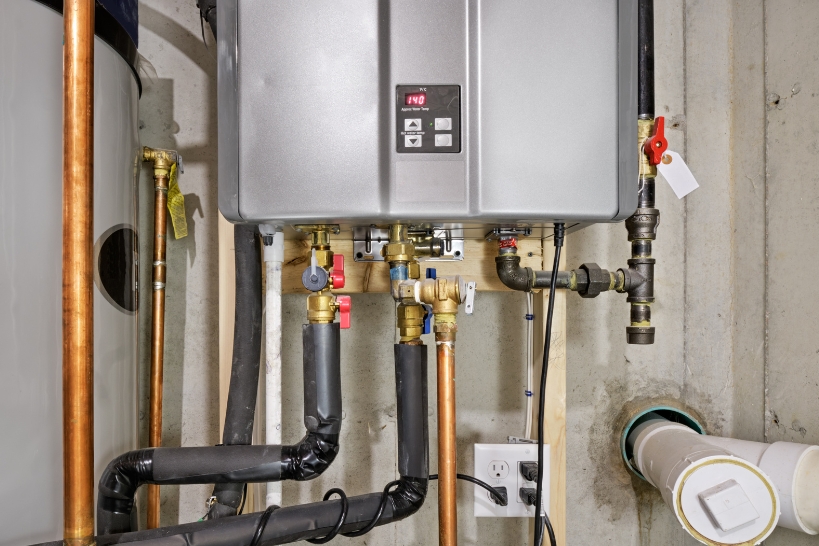
Does your Austin Gas Line and Venting Need Upgrading
Often, yes. A tankless water heater burns a large amount of gas quickly, so an Austin home with a half-inch gas line may need a larger line, and the vent usually changes too. This is the most common surprise in tankless quotes, and SALT identifies it up front.
A SALT plumber runs a gas load calculation from the meter capacity, pipe diameter, run length, and the combined demand of every other gas appliance. A range, furnace, and dryer running together can starve an undersized line and trip the new unit into an error code.
Venting is the second check. Tankless units need a vent type and route that match the model and local code, and a conversion from a tank often cannot reuse the old flue. Condensate drainage is the third item for high-efficiency units.
SALT lists the gas-line and venting upgrade as its own line in the flat-rate price, so an Austin homeowner approves the full scope before work begins. Permits and inspections are part of that scope where code requires them.
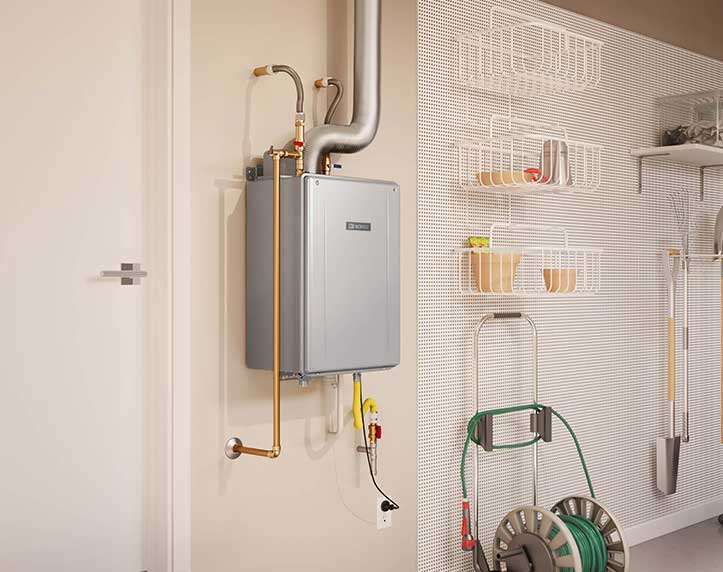
How Austin's Hard Water Affects a Tankless Water Heater
Austin Water’s 2025 water quality report lists average hardness at 5.4 grains per gallon, with results ranging from 4.1 to 7.4 over the year. That is moderately hard water, and heating it inside the narrow passages of a tankless heat exchanger leaves scale behind.
Scale builds gradually on the internal surfaces as the unit heats water. It restricts flow, makes temperature inconsistent, and adds strain on the heat exchanger, which can shorten the real service life of an Austin unit that never gets flushed. A tank heater collects sediment too, but its wide tank is far more forgiving than a narrow exchanger.
Because the yearly range runs from 4.1 to 7.4 grains per gallon, scale buildup differs from one Austin home to the next. The plumber reviews the home’s water conditions and then recommends flushing alone, a sediment pre-filter, or a whole-home water softener.
A proper installation includes service isolation valves, which give the plumber direct connection points for flushing. Water treatment protects fixtures and appliances throughout the home, and SALT’s plumbers install softeners and filtration alongside tankless units. Explore SALT’s plumbing services to plan treatment around your water.
How Often a Tankless Unit Needs Descaling in the Greater Austin Area
SALT recommends professional descaling every 6 to 12 months for a tankless unit in an Austin home without water treatment. A whole-home water softener slows mineral buildup and can safely lengthen that interval.
A flush circulates descaling solution through the heat exchanger, cleans the inlet filter, and checks for flow restrictions before they affect daily hot water. The manufacturer’s manual for the installed unit sets the official maintenance requirements, so SALT reads it for each Austin installation and aligns the schedule with it.
Signs a unit is overdue include longer waits for hot water, fluctuating temperatures, reduced flow, or error codes. SALT+ members receive an annual plumbing inspection that includes a water heater flush. For a checklist between visits, see these tankless water heater maintenance tips.
Will Hard Water Void Your Tankless Warranty
Hard water alone does not automatically void every tankless water heater warranty, but warranty terms vary by manufacturer and model, and many expect scale control and documented maintenance. SALT reviews the installed unit’s warranty language for each Austin customer.
Where a manufacturer sets water-quality limits or requires regular flushing, neglected service can give the manufacturer grounds to deny a claim. Keeping dated service records and following the maintenance instructions protects the coverage a homeowner paid for.
Keeping dated service records protects warranty coverage. A softener or sediment filter can also help keep water conditions within the limits a warranty sets. Homeowners who want the exact terms should read the warranty booklet for their model or ask the SALT plumber to walk through it.
Tankless vs Tank: The Honest Comparison for an Austin Home
Tankless suits Austin homeowners who want continuous hot water, wall-mounted space savings, and a system they will maintain. A conventional tank can be the better fit when upfront budget, existing infrastructure, or power-outage operation decide the question.
| Consideration | Tankless System | Conventional Tank |
|---|---|---|
| Installation scope | May need gas, venting, electrical, or condensate upgrades. | Often connects to existing water and fuel lines. |
| Hot-water supply | Continuous supply within rated flow capacity. | Fixed stored volume that can be depleted during high use. |
| Footprint | Wall-mounted and compact. | Requires floor space for a storage tank. |
| Maintenance | Needs periodic flushing and filter service. | Benefits from flushing, with fewer narrow heat-exchanger passages. |
| Hard-water sensitivity | More sensitive to mineral scale without regular care. | Affected by sediment but typically less sensitive to scale restrictions. |
| Power outage behavior | Will not operate without electricity for controls, ignition, and freeze protection. | A standard gas tank can generally continue operating. |
| Retrofit complexity | Higher when converting from a tank system. | Usually lower for a like-for-like replacement. |
Austin’s mineral-bearing water makes routine maintenance a practical part of owning an on-demand unit. Outdoor equipment also needs freeze planning, and a gas tankless unit cannot make hot water when the power is out. SALT gives Austin homeowners both sides before a decision. A longer breakdown sits in the tankless vs. regular water heater guide.
Federal credit status matters here. The IRS Energy Efficient Home Improvement Credit applied to qualifying water heaters placed in service before December 31, 2025, so a new installation in Austin today should not be planned around it. SALT recommends confirming any incentive with a tax professional and the IRS page before relying on one.
Brands SALT Installs and Services in Austin
SALT installs and services major tankless brands in Austin, including Rinnai, Navien, and Rheem. The plumber recommends a model by household demand, fuel type, venting route, and water conditions, not by brand name alone.
Repair comes first when the unit is sound. Common concerns include ignition faults, error codes, scale buildup, leaks, blocked condensate lines, venting problems, and an aging heat exchanger. SALT diagnoses the unit, explains the options, and compares repair cost against expected remaining life.
Replacement is not automatic. When heat exchanger damage or parts availability makes repair a poor value, SALT plans a replacement and sizes the gas, vent, and water connections for the new unit.

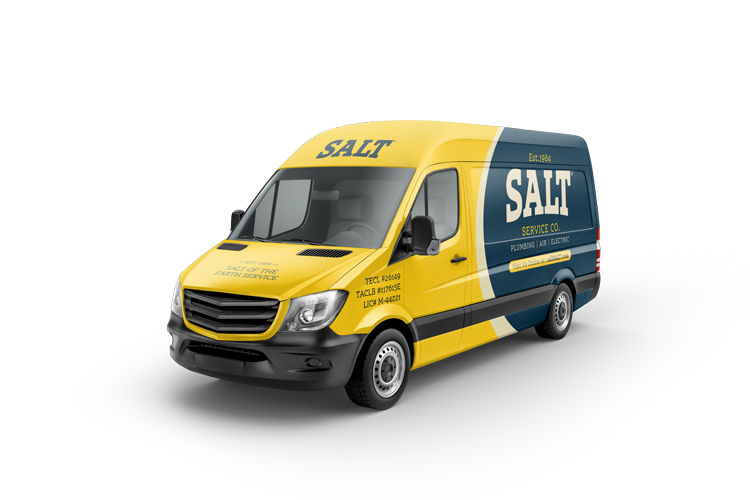
Same-day Installation and the $100 Credit in Austin
SALT offers same-day water heater installation in Austin, and if the installation is not completed the same day, the customer receives a $100 credit. The commitment applies to eligible installations, and SALT confirms eligibility when the job is booked.
Same-day timing depends on a compatible gas line, venting route, and permit needs, which is why SALT checks them first. A straightforward replacement often finishes in one day. A conversion with new venting or gas work may need extra time, and SALT says so before scheduling.
A licensed SALT plumber leaves the home clean, with shoe covers worn and a post-job walkthrough of the controls. Water heater problems rarely wait, and an Austin family without hot water should not either.
Frequently Asked Questions About Tankless Water Heaters in Austin
How much does a tankless water heater cost to install in Austin?
Installed cost in Austin depends on gas or electric fuel, the unit’s capacity, and any gas-line, venting, or electrical upgrades the home needs. SALT sets a flat-rate price after a licensed plumber reviews the home, and explains each line before work begins, so the approved number covers the full scope.
How long does tankless installation take?
A direct replacement in Austin typically takes four to six hours in a single day. A retrofit that needs a larger gas line, new exterior venting, or permit work can take a full working day. SALT reviews the existing setup beforehand, so the schedule is known before work starts.
Do I need a bigger gas line for a tankless water heater?
Often, yes. Many whole-home gas tankless units in Austin need more fuel than a half-inch line delivers, especially when other gas appliances run at the same time. A SALT plumber runs a gas load calculation using line length, pipe diameter, meter capacity, and total BTU demand before confirming the scope.
What size tankless unit do I need for my Austin home?
Size follows peak simultaneous hot-water demand, not bedroom count. SALT calculates the flow of the fixtures that run together and the temperature rise needed from cooler winter incoming water, then matches an Austin household to a unit with enough capacity and available gas or electric supply.
Can SALT install a tankless heater in an apartment or condo?
Possibly, depending on the building. SALT can assess tankless options for Austin condos and apartments, but the project may need owner or association approval, equipment access, a compliant venting route, and enough gas or electrical capacity. A site visit shows whether the building can support the unit.
Do tankless water heaters work in a power outage?
No. Gas tankless units still use electricity for controls, ignition, and safety components, so an Austin outage stops hot-water production unless an appropriate backup power setup is installed. A standard gas tank heater can generally keep working, which matters for homes that lose power during winter storms.
How often does a tankless unit need descaling in Austin?
SALT recommends professional descaling every 6 to 12 months for Austin homes without water treatment. A whole-home softener can lengthen that interval. The manufacturer’s manual for the installed unit sets the official maintenance requirements, so SALT checks it and the water conditions before setting a schedule.
Will hard water void my tankless water heater warranty?
Hard water alone does not automatically void every tankless warranty, but terms vary by manufacturer and model. Many warranties expect scale control and documented maintenance. Keeping dated service records protects warranty coverage.
Request a tankless installation review online or call (512) 956-7842.