

When you need Drain Services in Austin, trust your local experts at SALT Plumbing, Air, Electric. We keep our promises to you by sending our professional, insured, licensed and certified technicians to you. Our technicians have the skills, knowledge, and tools to fix most Drain problems on the spot – quickly and correctly.
When your SALT Drain Service experts arrives at your home they will explain all of your options before starting repairs so you can make informed decisions before any work begins. We provide Drain services and repairs on most brands of equipment, regardless of age, so you can trust us to perform a professional Drain job.
There are few things that are more daunting than Drain problems that happen in the middle of the night. With SALT at your side, however, there is no need to fear. We gladly offer service around the clock to help you find the solution that you need. Just call our emergency helpline today!

Our Drain Cleaners are both highly skilled & professionally trained, but we don’t stop there. Providing excellent customer service is our top priority. SALT is a family-owned, independent company that has served Central Texas since 1984. If you have any problems with your Plumbing, let us handle it! We make the entire process pain-free and keep you informed every step of the way! If you’re in need of a licensed, professional Plumber, A/C Technicians or Electrician there is no one better to call… call SALT today!

SALT has served Central Texas since 1984 and is family-owned and operated, built on “SALT of the Earth” service and Christian values. The Austin Business Journal named SALT a 2023 Best Places to Work. Through SALTcares, we give back close to home: each September, SALT matches up to $10,000 in donations to the Coalition to Cure Calpain 3, and our senior water heater giveaway provides a free water heater and installation to a local senior. Because SALT stays privately owned, those dollars stay in Central Texas.
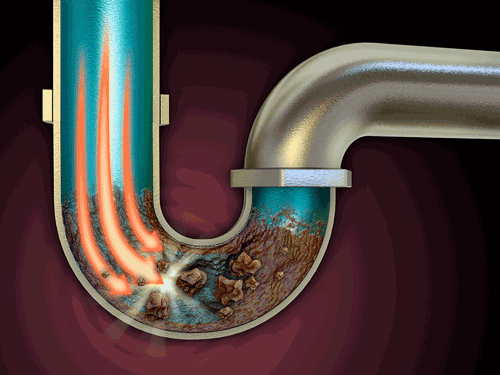
Watch for water draining more slowly than usual, gurgling sounds coming from a drain or nearby fixture, unpleasant odors rising from a sink or floor drain, or water backing up briefly before it drains. If more than one drain in the house is acting up at the same time — say, a toilet gurgles when you run the washing machine — that’s often a sign the problem is deeper in the main line rather than isolated to one fixture.
Drain snaking uses a flexible cable to physically break up or pull out a clog, and it’s typically the right fit for a single, localized blockage like hair in a bathroom drain. Drain cleaning is a broader term that can include snaking as well as other clearing methods for everyday clogs. Hydro jetting uses high-pressure water to scour the entire interior of a pipe, removing grease buildup, mineral scale, and smaller root intrusions — it’s generally reserved for recurring clogs or a main line that needs a full clean-out rather than a quick fix. A technician can tell you which approach fits your situation after a look at what’s actually going on in the line.
A camera inspection lets a technician see the exact condition inside the pipe — the specific location and cause of a blockage, whether tree roots have grown into the line, whether the pipe itself is cracked, collapsed, or misaligned, and whether the problem is likely to come back. Clearing a clog without that information means treating the symptom without knowing whether there’s a bigger issue causing it to recur.
The most common culprits are pouring grease or cooking oil down the kitchen sink (it solidifies and builds up over time), flushing anything other than toilet paper — including “flushable” wipes, which don’t break down the way toilet paper does — and letting hair and soap scum accumulate in bathroom drains without regular clearing. Outdoors, tree roots seeking moisture are a frequent cause of slow-building sewer line problems that have nothing to do with what goes down the drain at all.
Yes — tree roots are drawn to the moisture and nutrients inside sewer lines and can enter through small cracks or loose joints, gradually growing into a mass that blocks or damages the pipe. Signs this might be your issue include recurring clogs that come back soon after being cleared, gurgling drains throughout the house, unusually lush or soggy patches in your yard along the line’s path, or slow drainage that gradually gets worse over months rather than happening suddenly. A camera inspection is the most reliable way to confirm root intrusion versus another cause.
A basic water filter, like a pitcher filter or a simple under-sink cartridge, typically targets taste and odor from one tap. A drinking water system is a more complete setup — often a reverse osmosis unit or a similar multi-stage filtration system — installed to address a broader range of contaminants and provide filtered water at a dedicated faucet or throughout the home. SALT evaluates your water quality and household needs to recommend the right level of filtration rather than a one-size-fits-all fix.
Stop running water anywhere in the house immediately — every flush, shower and washing machine cycle adds to the backup. Keep people and pets away from the affected area; sewage is a genuine health hazard, not just a mess. Do not pour chemical drain cleaner into a backed-up line. If the backup is reaching multiple fixtures, the problem is in the main line, not one drain. Call (512) 956-7842 — this is a true emergency and is handled as one.
SALT backs its repairs and installations with a lifetime guarantee for SALT+ members — if covered work fails, SALT returns and makes it right. For non-members, a technician will explain the warranty that applies to the specific work before you approve it. Worth knowing: a drain that re-clogs quickly after a clearing usually indicates an underlying cause — root intrusion, a bellied pipe, or heavy grease buildup — which is why a camera inspection is often recommended rather than repeat clearings.
Both. Clearing a blockage and repairing the line that caused it are different jobs, and a camera inspection determines which one you need. If the line is intact and simply obstructed, clearing it is enough. If the camera shows root intrusion, a cracked or collapsed section, or a bellied run holding water, that section needs repair or replacement — and SALT handles sewer line repair and replacement as well as clearing, including coordinating any permitting the work requires.